
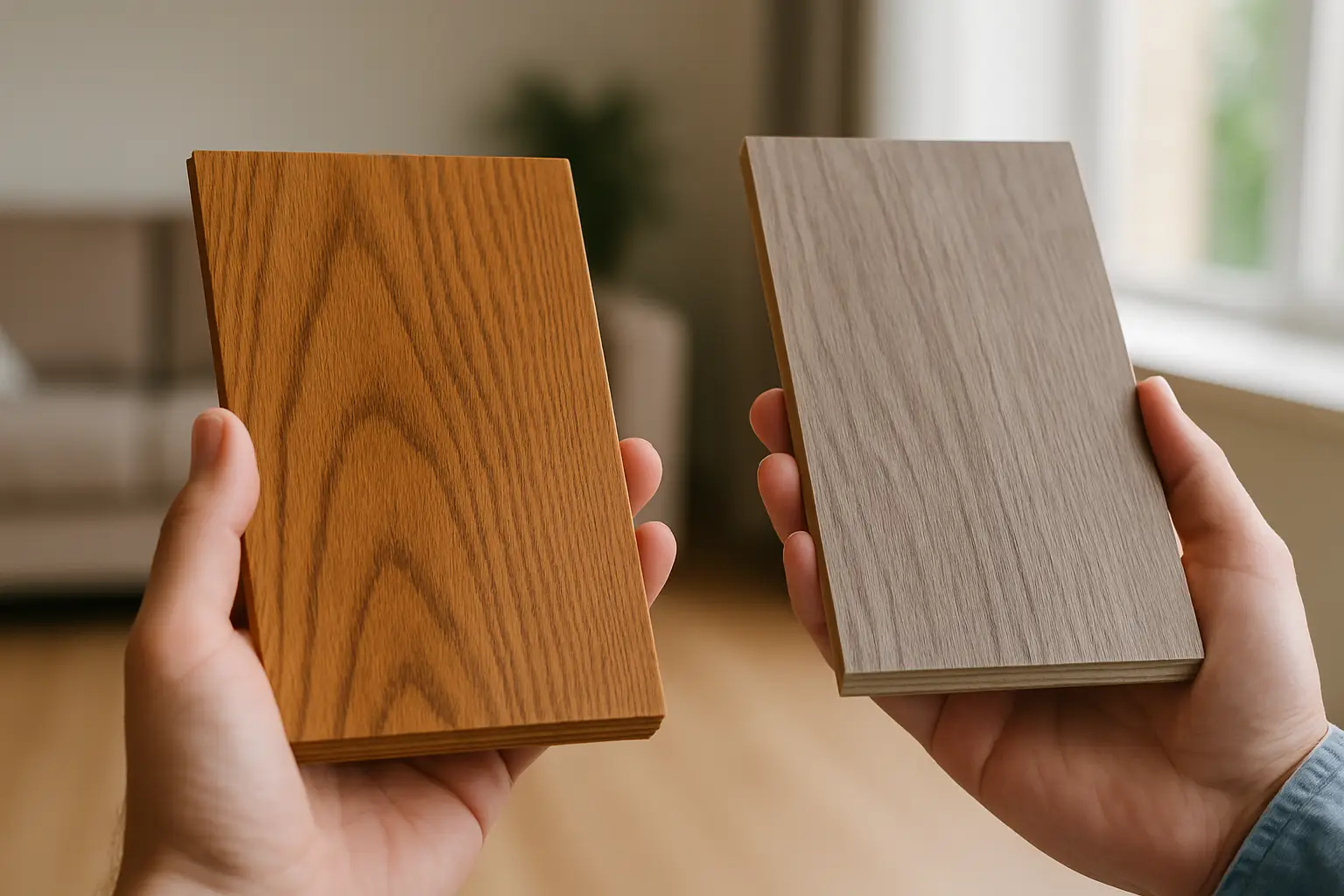

Flooring serves as the structural and aesthetic foundation of every home. The material you choose influences not only the visual tone of your living space but also your daily maintenance routine, indoor comfort, long-term property value, and renovation budget. Among the vast array of surface materials available today, solid or engineered hardwood and synthetic laminate remain two of the most sought-after options.
Selecting between hardwood and laminate requires looking beyond surface-level appearance. While both choices can deliver a warm wood-grain aesthetic, they differ fundamentally in material composition, structural behavior, resistance to wear, moisture tolerance, total cost, and environmental footprint. Understanding these core distinctions ensures you select a surface that aligns perfectly with your household requirements.
Understanding the Material Compositions
To make an informed decision, it helps to understand what each material actually consists of beneath the top finish.
Hardwood Flooring Construction
Hardwood flooring comes in two main structural forms: solid hardwood and engineered hardwood.
-
Solid Hardwood: Milled from single pieces of solid timber, typically oak, maple, walnut, cherry, or hickory. Each plank is unified real wood throughout its entire thickness, which usually ranges from one-half inch to three-quarters of an inch.
-
Engineered Hardwood: Features a genuine hardwood veneer top layer, known as a wear layer, bonded over multiple cross-grained plies of high-density plywood or hardwood core boards. This construction gives engineered wood greater dimensional stability against humidity fluctuations while keeping real wood on the surface.
Laminate Flooring Construction
Laminate is a completely synthetic multi-layer product engineered to mimic natural wood or stone. It consists of four distinct core layers fused together under heat and pressure:
-
Wear Layer: A clear, tough top coating made of aluminum oxide or melamine resin that guards against scratches, UV fading, and everyday stains.
-
Design Layer: A high-resolution photograph or digital print of natural wood grain, capturing fine details like knots and growth rings.
-
Core Layer: A dense core board made of high-density fiberboard, constructed from compressed wood fibers and synthetic resin binders.
-
Backing Layer: A moisture-resistant bottom layer that provides structural stability and prevents the plank from warping or cupping.
Aesthetic Appeal and Visual Authenticity
The visual impact of your floor sets the character of your entire home interior. While manufacturing technologies have advanced significantly, key differences in authenticity remain.
Hardwood is inherently unique. Because every tree grows differently, no two hardwood planks share identical grain patterns, natural knots, or subtle color shifts. Over time, genuine wood develops a rich patina as it ages and reacts gently to natural sunlight. Hardwood can also be stained in custom shades, sanded to change texture, or finished with matte, satin, or high-gloss sealants.
Laminate uses high-definition photography combined with embossed-in-register surface texturing. This technique aligns the tactile texture of the plank directly with the printed wood grain image underneath. Higher-end laminate planks reproduce realistic textures and rustic hand-scraped finishes convincingly. However, because laminate relies on printed images, pattern repetition will eventually occur across large floor spans.
Durability, Scratch Resistance, and Repairability
Daily life tests your floors constantly through foot traffic, heavy furniture, dragged toys, and pet claws. How each material handles wear varies dramatically.
-
Scratch and Impact Resistance: Laminate excels in scratch resistance. Its aluminum oxide wear layer stands up to sharp pet nails, high heels, and abrasive dirt particles far better than traditional hardwood finishes. Hardwood is softer and more susceptible to surface denting, gouging, and scratching, particularly under heavy traffic or soft timber species like pine.
-
Refinishing and Repairs: Hardwood holds a distinct advantage in longevity because it can be sanded down and refinished multiple times. A solid hardwood floor can last well over a century with proper care, allowing homeowners to eliminate deep scratches and even change stain colors during future updates. Laminate cannot be sanded or refinished. If a laminate plank sustains severe damage or deep chipping, the affected plank must be unclipped and replaced entirely.
Moisture Resistance and Environmental Vulnerability
Water and indoor humidity are critical variables when choosing flooring for kitchens, entryways, basements, and bathrooms.
Hardwood is highly sensitive to moisture and relative humidity. Excessive water can cause solid wood planks to swell, buckle, cupping at the edges, or crown in the center. Standing water can cause permanent structural damage rapidly. While engineered hardwood handles minor moisture swings better than solid wood, neither product is suited for damp environments like full bathrooms, laundry rooms, or unconditioned basements.
Laminate performs better against superficial liquid spills, provided they are wiped up promptly. However, standard high-density fiberboard cores remain vulnerable to standing moisture. If liquid seeps between plank joints and penetrates the core layer, the compressed fibers swell and delaminate, leading to raised edges that cannot be repaired once dry. Water-resistant and waterproof laminate options featuring sealed joint systems and hydrophobic cores are available for higher-moisture zones.
Installation Complexity and Maintenance Demands
The ease of installation and daily upkeep influences both up-front renovation costs and long-term convenience.
Installation Methods
-
Hardwood Installation: Requires specialized tools, fasteners, and professional installation. Solid hardwood must be nailed or stapled directly to a wood subfloor or glued down over concrete. The subfloor must be flat, clean, and dry.
-
Laminate Installation: Uses a tongue-and-groove click-lock system, forming a floating floor that rests above the subfloor without nails or adhesive. This makes laminate a popular choice for DIY enthusiasts, as planks easily snap together over a thin foam underlayment.
Cleaning and Maintenance
Routine maintenance for both materials involves regular sweeping, dust mopping, or vacuuming using a hard-floor setting without a rotating beater bar. Hardwood requires specialized wood cleaners that preserve the protective polyurethane or oil finish, and standing water should never be used. Laminate requires damp mopping with dedicated laminate solutions or a microfiber mop; excessive water must be avoided to prevent moisture intrusion at plank seams.
Financial Investment and Return on Value
Budget considerations extend beyond the initial material purchase price to include professional labor, subfloor prep, and property resale value.
Laminate is significantly more economical up front. Material prices generally range from one to five dollars per square foot, with straightforward installation keeping labor expenses low. It provides a luxury wood appearance at a fraction of the cost.
Hardwood represents a premium investment. Material costs range from four to fourteen dollars per square foot for common domestic species, rising higher for exotic hardwoods. Professional labor costs are also higher due to the complex installation requirements. However, hardwood delivers unmatched return on investment by boosting overall property appraisal value and attracting potential buyers during home resale.
Frequently Asked Questions
Can laminate flooring be installed directly over existing floor coverings like tile or vinyl?
Yes, laminate can be installed over existing hard surface flooring like ceramic tile, sheet vinyl, or wood, provided the underlying floor is smooth, flat, structurally sound, and clean. An appropriate underlayment should be placed over the old floor to cushion the laminate planks and reduce sound transmission. Soft or uneven surfaces like plush carpeting must be removed prior to installation.
How does the indoor sound experience differ between hardwood and laminate floors?
Solid hardwood is dense and naturally absorbs sound, producing a firm, quiet feel underfoot. Standard floating laminate can sound hollow or produce a clicking noise under foot traffic if installed without quality acoustical underlayment. Adding a high-density foam or cork underlayment beneath laminate helps dampen impact sound and creates a softer feel underfoot.
What AC ratings should homeowners look for when selecting laminate flooring?
The Abrasion Class rating measures a laminate floor’s durability on a scale from AC1 to AC6. For typical residential applications, choose an AC3 rating for moderate traffic areas like bedrooms, or an AC4 rating for high-traffic zones like entryways, hallways, and living rooms. AC5 and AC6 ratings are intended for heavy commercial environments.
Which flooring option is better for households with indoor pets?
Laminate with a high AC rating is generally better for households with active pets because its tough wear layer resists claw scratches better than most hardwood finishes. If hardwood is preferred, select a hard wood species like white oak or hickory with a low-sheen or wire-brushed finish that helps disguise minor scratches, and keep pet nails trimmed regularly.
Is engineered hardwood considered real hardwood or synthetic laminate?
Engineered hardwood is real wood. Its surface consists of a genuine hardwood veneer, giving it the exact look, feel, and natural characteristics of solid timber. Laminate is a synthetic material that uses a printed photograph beneath a protective resin coat to imitate the visual texture of wood.
How long should hardwood planks acclimate to a home before installation begins?
Hardwood planks must acclimate in the installation space for three to seven days prior to installation. Unpack the boards and store them flat in the room where they will be laid, with climate controls running at normal living conditions. This allows the wood to adjust to the room’s temperature and relative humidity, preventing excessive expansion or shrinkage after installation.
Can engineered hardwood be refinished as many times as solid hardwood?
No, engineered hardwood cannot be refinished as often as solid wood. The number of times engineered wood can be sanded depends on the thickness of its top wear layer. A thick wear layer can typically be sanded and refinished two to three times, whereas a thin veneer layer may only allow for light screening and recoating without full sanding.

Comments are closed.